
The door came down on something and didn't go back up
The likely cause, a quick check, what's safe to do, and what it usually costs.
Most likely: Door is not set to travel far enough down, so it stops on the object
Chamberlain gives this as the first thing to correct when the door stops on the test board.
Try the safe steps first; call a company if they don't fix it.
Also possible
- Force set too high, or raised to mask an unbalanced or sticking door. Door pushes hard on the board; door is heavy or sticks when a technician tests balance. Needs a pro
- Old or faulty opener that cannot be made to reverse. Still fails after correct adjustment, or the opener has no floor sensors at all. Needs a pro
Safe to do now
- If a person or pet is pinned, call 911 now. If the opener works, press the wall button once to raise the door; if it won't rise, follow Someone is trapped under or pinned by the garage door right now. If someone is hurt but not pinned, call 911.
- First look: door crooked, cable slack or a roller out? Do not run it; call a technician. If you can reach the opener's plug without a ladder and without standing under the door, unplug it.
- Stop using the opener until it passes the reversal test.
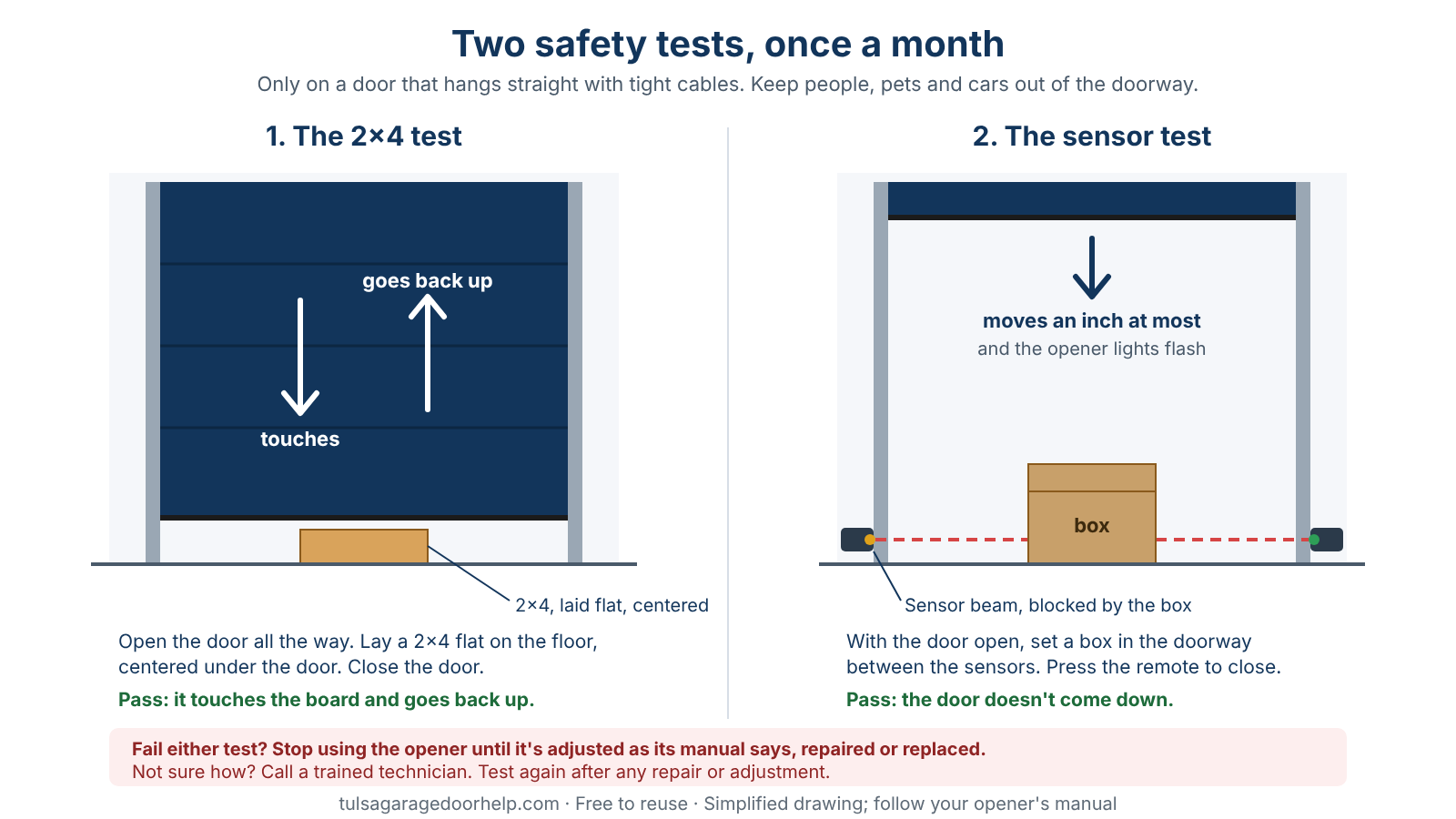
- Lay a 2x4 flat on the floor under the middle of the door and close it: the door must stop and go back up.
- Door straight, springs and cables intact? Reset travel (how far the door moves) once by your manual. If unsure, have a technician do it.
- Retest. If it still fails, stop using the opener and call a technician.
Don't
- Do not test with your body, a child, a pet or a soft object.
- Do not raise force settings.
- Do not leave a failing opener in service.
Battery backup? An opener with a backup battery can still run the door when it is unplugged. Keep everyone clear of the door and keep the remotes out of reach. Your opener's manual says how to disconnect the battery.
Typical price
If it's the most likely cause: Opener repair: typically $124–$368 (average $234). Source: HomeAdvisor (no date shown).
If it turns out to be one of the others:
- Most repairs: typically $98–$371 (across all repairs, including big ones: $98–$860). Source: This Old House, updated May 29, 2026.
- New opener, installed: typically $390–$650 (unit plus installation). Source: Thumbtack, updated Jul 1, 2026.
National figures, not a quote. Every price range and its source.
Good to know: Makers differ: Chamberlain says to add down travel first, Genie says to lower the close force. Never raise the force. If unsure, have a technician do it.
Step by step: Garage door stops short or reverses? Reset the travel limits
Photos that help
These three photos help a shop quote it in writing:
- The whole door from inside the garage
- The spring above the door, end to end
- The label on the opener (brand and model)
Take them from where you stand. Don't go under the door, and don't touch the springs, cables or tracks. How to send them.
Where this comes from (6 sources)
- How to Test the Safety Reversal System, Chamberlain Group (LiftMaster, Chamberlain and Craftsman support)
- Paper Towels vs. 2x4s, DASMA (Door & Access Systems Manufacturers Association)
- My Garage Door Will Not Fully Close, Chamberlain Group (LiftMaster, Chamberlain and Craftsman support)
- Garage door opener safety alert (garage.pdf), U.S. Consumer Product Safety Commission
- Testing the Safety Reverse Systems: Genie Garage Door Opener, Genie
- TDS351 Garage Door Operator laws fact sheet, DASMA (Door & Access Systems Manufacturers Association)
We read each source on 10 November 2026. The order of causes follows the makers' own troubleshooting pages where they give one; otherwise it is our judgment, and the page says so.
Not quite it? Describe your problem
Describe it in your own words, like "goes back up" or "remote stopped working".
Related problems
- I don't know how often the door should be checked or serviced
- Someone is trapped under or pinned by the garage door right now
- Someone broke in through, forced or tried to pry open the garage door
- A hand or fingers got caught between the door sections or in the hardware
- Someone was hurt by a spring, cable or falling door
- My opener is very old and has no safety sensors by the floor
Got a quote that feels high?
Text the amount and what it covers to (918) 205-5200. We compare it with published price data (the sources on our price page), and text you back within a business day. Free, no obligation, and we don't repair doors.
Diagram: Two monthly safety tests: the 2x4 test and the sensor test
See the 2x4 test in 3D
Our 3D garage door model shows what a pass looks like: the door touches the board and goes back up. Retest only after the “Safe to do now” steps above. If it still fails, stop using the opener and call a technician.