
I don't know how often the door should be checked or serviced
The likely cause, a quick check, what's safe to do, and what it usually costs.
Most likely: Monthly safety tests are due (reversal on a 2x4, safety sensors)
CPSC, Chamberlain and the International Door Association all set a monthly or 30-day interval. The safety sensors are the two small boxes near the floor.
You can usually fix this yourself.
Also possible
- Door balance has not been checked. Door closed, springs and cables intact, release pulled: lift to about waist height and let go carefully. It should stay. DIY
- Yearly lubrication and a look at seals and hardware are due. When were the rollers, bearings and hinges last lubricated? Is any hardware loose or seal cracked? DIY
- A test failed or the door feels heavy: professional service needed. Did the door fail to reverse, drop or rise on its own at half height, or feel heavy? Needs a pro
Safe to do now
- Once a month: reversal test on a 2x4 laid flat, then pass a broom handle through the sensor beam.
- Once a month, if springs and cables look intact: door closed, release, lift to waist height. Stop if heavy.
- For the yearly job: close the door and unplug the opener before you touch anything.
- At least once a year: lubricate metal rollers and hinges (Chamberlain) with silicone spray or white lithium grease, not WD-40 (Clopay); check seals.
- Plug the opener back in when you are done. If any test fails, stop using the opener and call a technician.
Don't
- Do not adjust springs, cables or other hardware yourself.
- Do not lubricate the tracks (Clopay). Nylon rollers: don't lubricate the wheels (Clopay); if your door maker says otherwise, follow your door maker.
- Red release cord: only with the door fully closed. Never with a broken spring, loose cable or crooked door.
- Do not test reversal or the sensor beam with any part of your body.
Battery backup? An opener with a backup battery can still run the door when it is unplugged. Keep everyone clear of the door and keep the remotes out of reach. Your opener's manual says how to disconnect the battery.
Typical price
If it's the most likely cause: Often free: you can usually sort this yourself.
If it turns out to be one of the others:
- Service call / diagnosis: typically $50–$75 (often waived if you go ahead with the repair). Source: This Old House, updated May 29, 2026.
National figures, not a quote. Every price range and its source.
Step by step: How to lubricate a garage door (and which lubricant to use)
Where this comes from (6 sources)
- Non-Reversing Automatic Garage Door Openers Are a Hazard (CPSC safety alert), U.S. Consumer Product Safety Commission
- Does my garage door opener require any monthly or annual maintenance?, Chamberlain Group (LiftMaster, Chamberlain and Craftsman support)
- Safety & Maintenance, International Door Association
- Chamberlain 1200 User Manual, page 31: Care of your opener / Maintenance schedule, Chamberlain (owner's manual, hosted by manualsdir.com)
- Garage Door Maintenance Guide, Clopay
- TDS 369: Frequently Asked Questions on Automated Residential Garage Door Systems, DASMA (Door & Access Systems Manufacturers Association)
We read each source on 10 November 2026. The order of causes follows the makers' own troubleshooting pages where they give one; otherwise it is our judgment, and the page says so.
Not quite it? Describe your problem
Describe it in your own words, like "goes back up" or "remote stopped working".
Related problems
- I worry a burglar could hook the red release cord from outside and open the door
- I want to wash the garage door or remove stains, mildew, graffiti or scratches
- I am going away and want to lock the garage door down properly
- I want to leave the door open a few inches for air or for a pet
- I was told the opener needs a battery backup, or mine has none
- My opener is old and I am worried its remote code can be copied
Got a quote that feels high?
Text the amount and what it covers to (918) 205-5200. We compare it with published price data (the sources on our price page), and text you back within a business day. Free, no obligation, and we don't repair doors.
Diagram: Two monthly safety tests: the 2x4 test and the sensor test
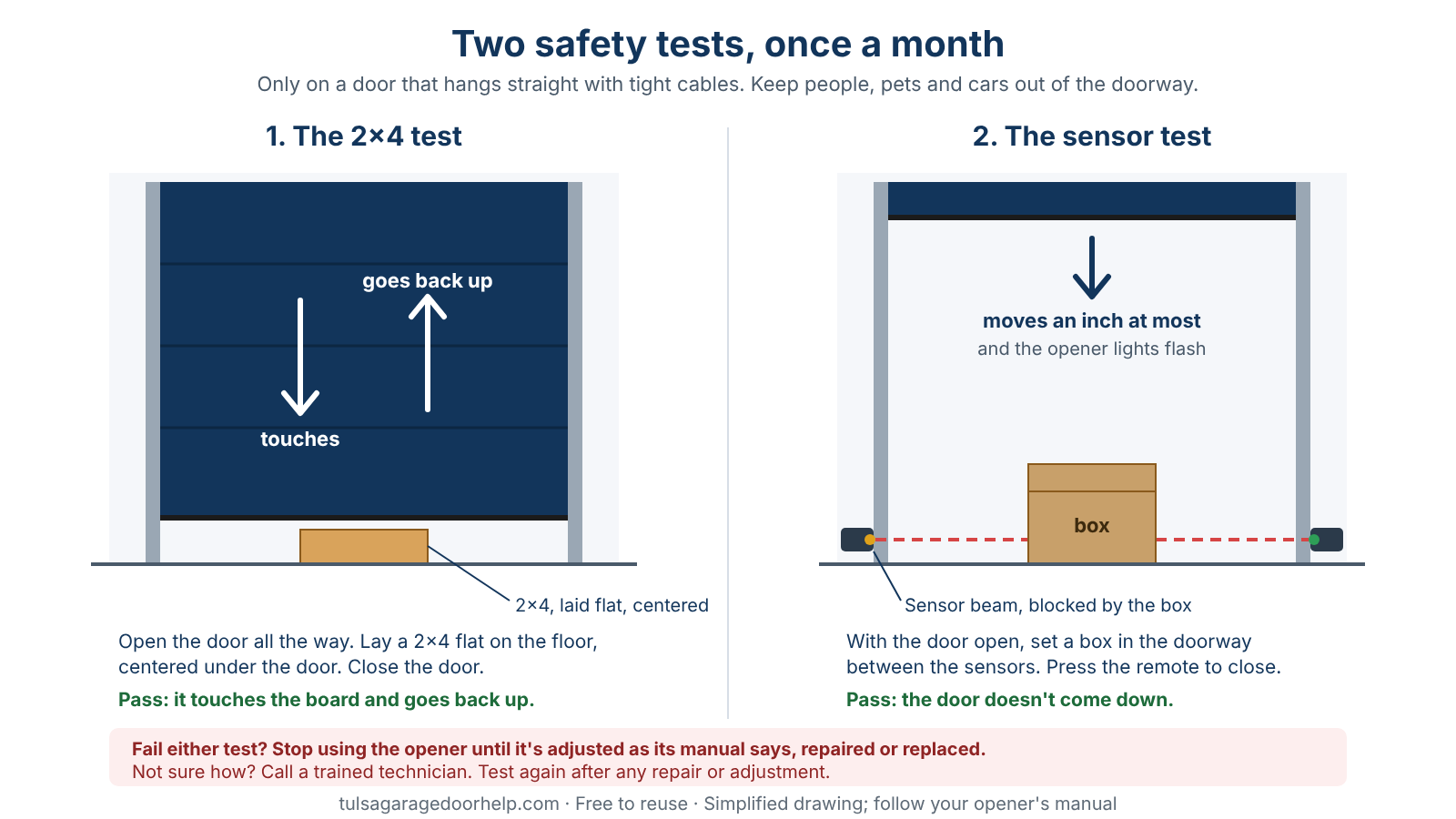
See the monthly tests in 3D
Our 3D garage door model acts out the 2x4 reverse test and the sensor test, so you know what a pass looks like.