The rubber seal on the bottom is torn or flat and mice, bugs or leaves get in
The likely cause, a quick check, what's safe to do, and what it usually costs.
Most likely: Bottom seal is worn out (cracked, hard, flat or torn)
Clopay lists cracks, holes, warping and lost floor contact as the signs a seal needs replacing.
Try the safe steps first; call a company if they don't fix it.
Also possible
- Gap of about a quarter inch or more is letting mice in. Check corners and low spots with the door closed: can a pencil slide under anywhere? DIY first
- Seal torn when the door was forced off ice. Did the damage appear after a freeze, with a strip of rubber left stuck to the floor? DIY first
Safe to do now
- Gap at one side only? Look, hands off: a tilted door or slack cable means stop using it and call for repair.
- Check the seal regularly for cracks, flat spots and daylight (Clopay suggests looking over the door monthly).
- Unplug the opener first, so nobody can run the door. Wash the seal with mild soap and water; Clopay suggests a silicone lubricant.
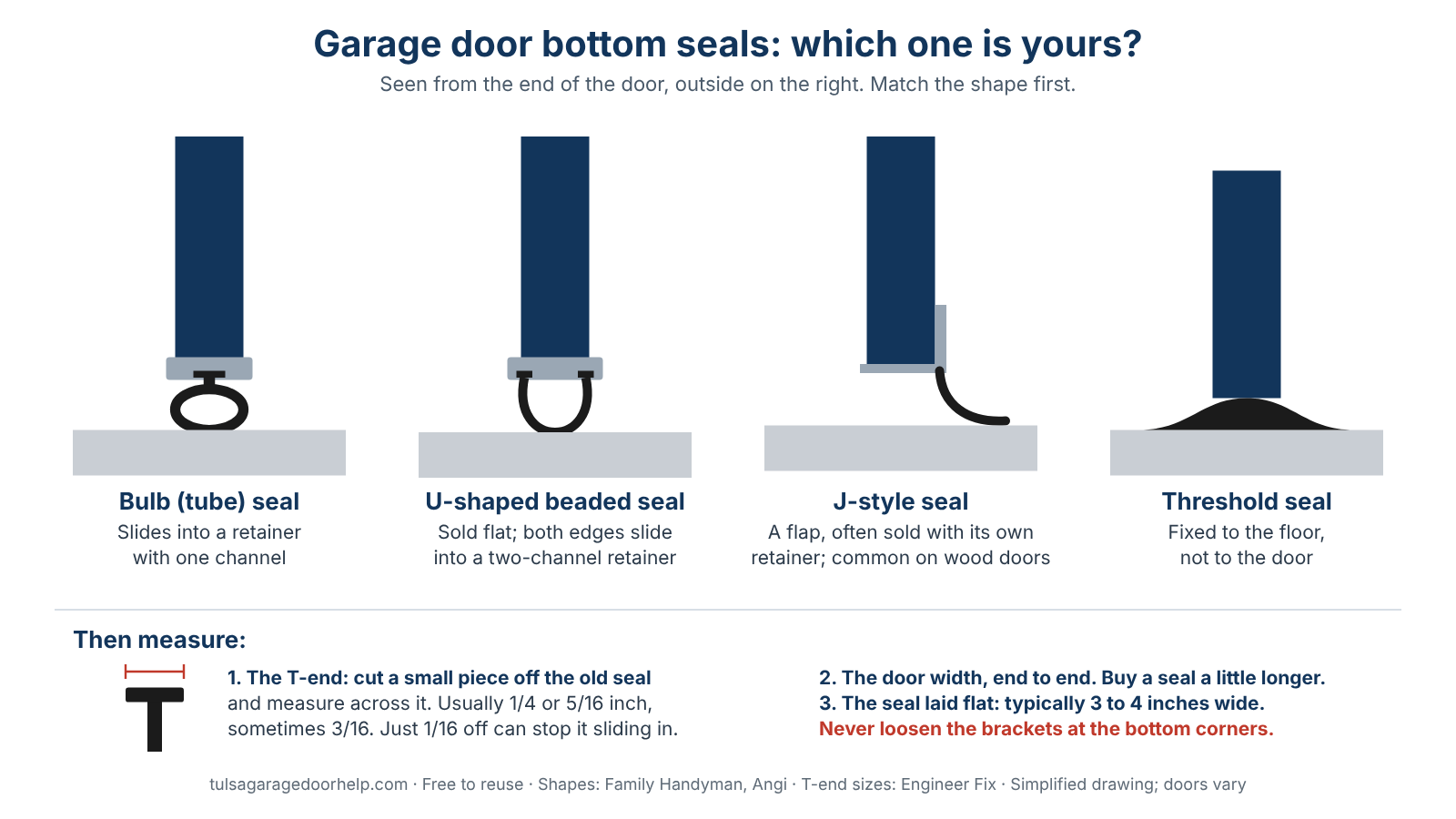
- Note the seal's shape and the door brand before buying; Clopay says seal designs vary.
- Clopay calls most seal replacements DIY-friendly; a garage door company can also do it. Our rule: only on a door in good working order, and never loosen the brackets at the door's bottom corners to get it out.
Don't
- Do not rely on rubber or vinyl alone to stop rodents; they can gnaw through it.
- Do not use petroleum-based lubricant on weather seals.
- Do not loosen or remove the door's bottom corner brackets to get a seal out: that is a technician's job.
Battery backup? An opener with a backup battery can still run the door when it is unplugged. Keep everyone clear of the door and keep the remotes out of reach. Your opener's manual says how to disconnect the battery.
Typical price
If it's the most likely cause: Most repairs: typically $98–$371 (across all repairs, including big ones: $98–$860). Source: This Old House, updated May 29, 2026.
National figures, not a quote. Every price range and its source.
Good to know: The bottom seal guide below has Clopay's steps, how to measure for the right seal, and when to leave it to a garage door company.
Step by step: Garage door bottom seal: which one fits, and how to replace it
Photos that help
These three photos help a shop quote it in writing:
- The gap or the worn seal with the door closed
- The bottom corner of the door from inside
- The whole door from outside
Take them from where you stand. Don't go under the door, and don't touch the springs, cables or tracks. How to send them.
Where this comes from (5 sources)
- Door Busters: How bad is it to not replace a worn bottom weather seal?, Clopay
- Garage Door Seals - A Buyer's Guide, Clopay
- Rodent-Proof Construction - Structural (NebGuide G1530), University of Nebraska-Lincoln Extension
- Fixing Garage Door Problems from Cold Weather, Clopay
- What type of perimeter weatherstripping should I use for my garage door?, Garaga Inc. (manufacturer page on a dealer microsite)
We read each source on 10 November 2026. The order of causes follows the makers' own troubleshooting pages where they give one; otherwise it is our judgment, and the page says so.
Not quite it? Describe your problem
Describe it in your own words, like "goes back up" or "remote stopped working".
Related problems
- I feel a draft or see daylight around the sides or top of the door
- The garage is freezing in winter or an oven in summer
- Rain leaks in at the top, between the sections or around the windows
- The inside of the door is wet with condensation, frost or mold
- The door is frozen to the ground and will not lift
- There is a gap or daylight under the door, often on one side only
Got a quote that feels high?
Text the amount and what it covers to (918) 205-5200. We compare it with published price data (the sources on our price page), and text you back within a business day. Free, no obligation, and we don't repair doors.
Diagram: Garage door weather seals: where each one goes
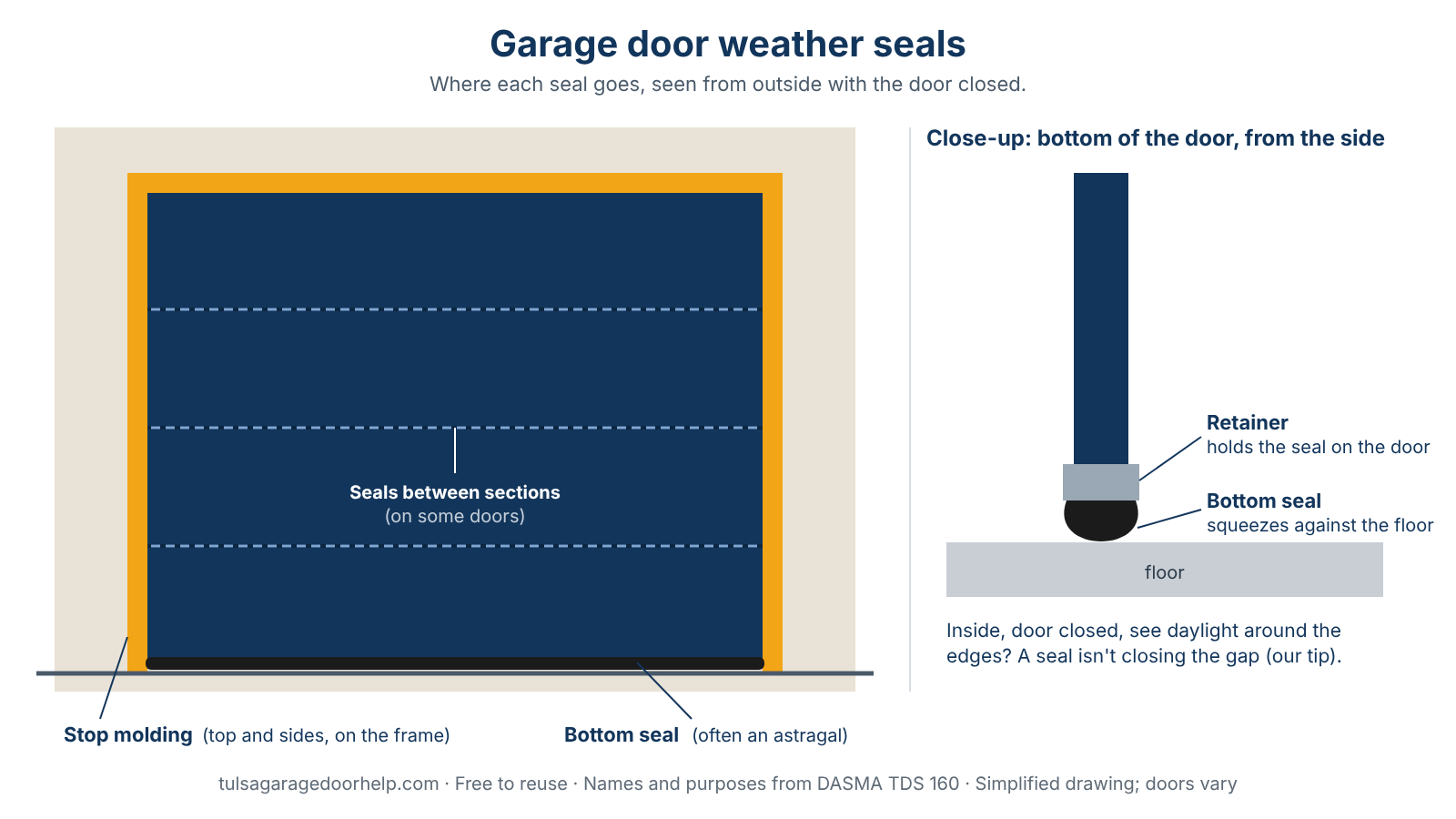
Diagram: Garage door bottom seals: which one is yours?