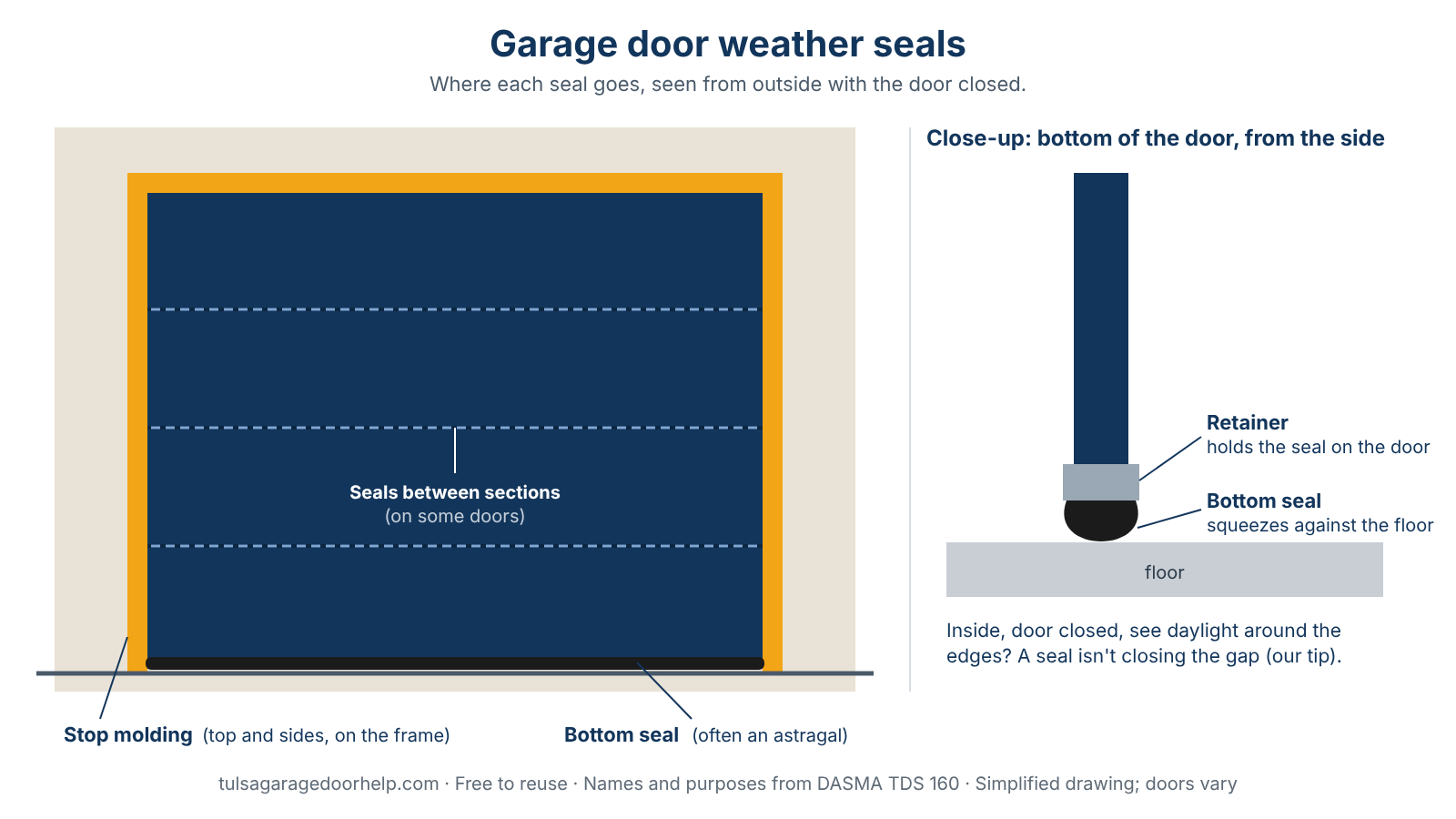
I feel a draft or see daylight around the sides or top of the door
The likely cause, a quick check, what's safe to do, and what it usually costs.
Most likely: Side and top (perimeter) seals are cracked, brittle or missing
Clopay lists cracks, tears, missing pieces and brittleness as the replacement signs for these seals.
Try the safe steps first; call a company if they don't fix it.
Also possible
- Seal flap no longer reaches the door face. Is the flap intact but standing off the door, more at one corner or at the top center? Needs a pro
- Door not sitting square in the opening. Compare the gap on left and right: a big difference suggests the door, not the seal. Needs a pro
Safe to do now
- Check for light and drafts with the door closed, as Clopay suggests every three months.
- Close the door and unplug the opener before you touch anything.
- Replace cracked or brittle side and top seal; Clopay calls most seal jobs DIY-friendly.
- Clean seals and use a silicone-based lubricant, not petroleum, to keep them flexible (Clopay).
- Call a garage door company if the seal is fine but the door stands off the frame.
Don't
- Do not move the tracks or brackets to push the door against the seal.
- Do not use petroleum-based lubricant on the weatherstripping.
Battery backup? An opener with a backup battery can still run the door when it is unplugged. Keep everyone clear of the door and keep the remotes out of reach. Your opener's manual says how to disconnect the battery.
Typical price
If it's the most likely cause: Most repairs: typically $98–$371 (across all repairs, including big ones: $98–$860). Source: This Old House, updated May 29, 2026.
If it turns out to be one of the others:
- Service call / diagnosis: typically $50–$75 (often waived if you go ahead with the repair). Source: This Old House, updated May 29, 2026.
National figures, not a quote. Every price range and its source.
Photos that help
These three photos help a shop quote it in writing:
- The gap or the worn seal with the door closed
- The bottom corner of the door from inside
- The whole door from outside
Take them from where you stand. Don't go under the door, and don't touch the springs, cables or tracks. How to send them.
Where this comes from (4 sources)
- Garage Door Seals - A Buyer's Guide, Clopay
- TDS 185: Thermal Bowing of Bonded Core Sections, DASMA (Door & Access Systems Manufacturers Association)
- TDS 1503: Wind-Driven Rain and Sectional Doors, DASMA (Door & Access Systems Manufacturers Association)
- What type of perimeter weatherstripping should I use for my garage door?, Garaga Inc. (manufacturer page on a dealer microsite)
We read each source on 10 November 2026. The order of causes follows the makers' own troubleshooting pages where they give one; otherwise it is our judgment, and the page says so.
Not quite it? Describe your problem
Describe it in your own words, like "goes back up" or "remote stopped working".
Related problems
- The garage is freezing in winter or an oven in summer
- Rain leaks in at the top, between the sections or around the windows
- The inside of the door is wet with condensation, frost or mold
- The door is frozen to the ground and will not lift
- There is a gap or daylight under the door, often on one side only
- The bottom seal sticks to the floor when it is not icy, and the door jerks free
Got a quote that feels high?
Text the amount and what it covers to (918) 205-5200. We compare it with published price data (the sources on our price page), and text you back within a business day. Free, no obligation, and we don't repair doors.
Diagram: Garage door weather seals: where each one goes