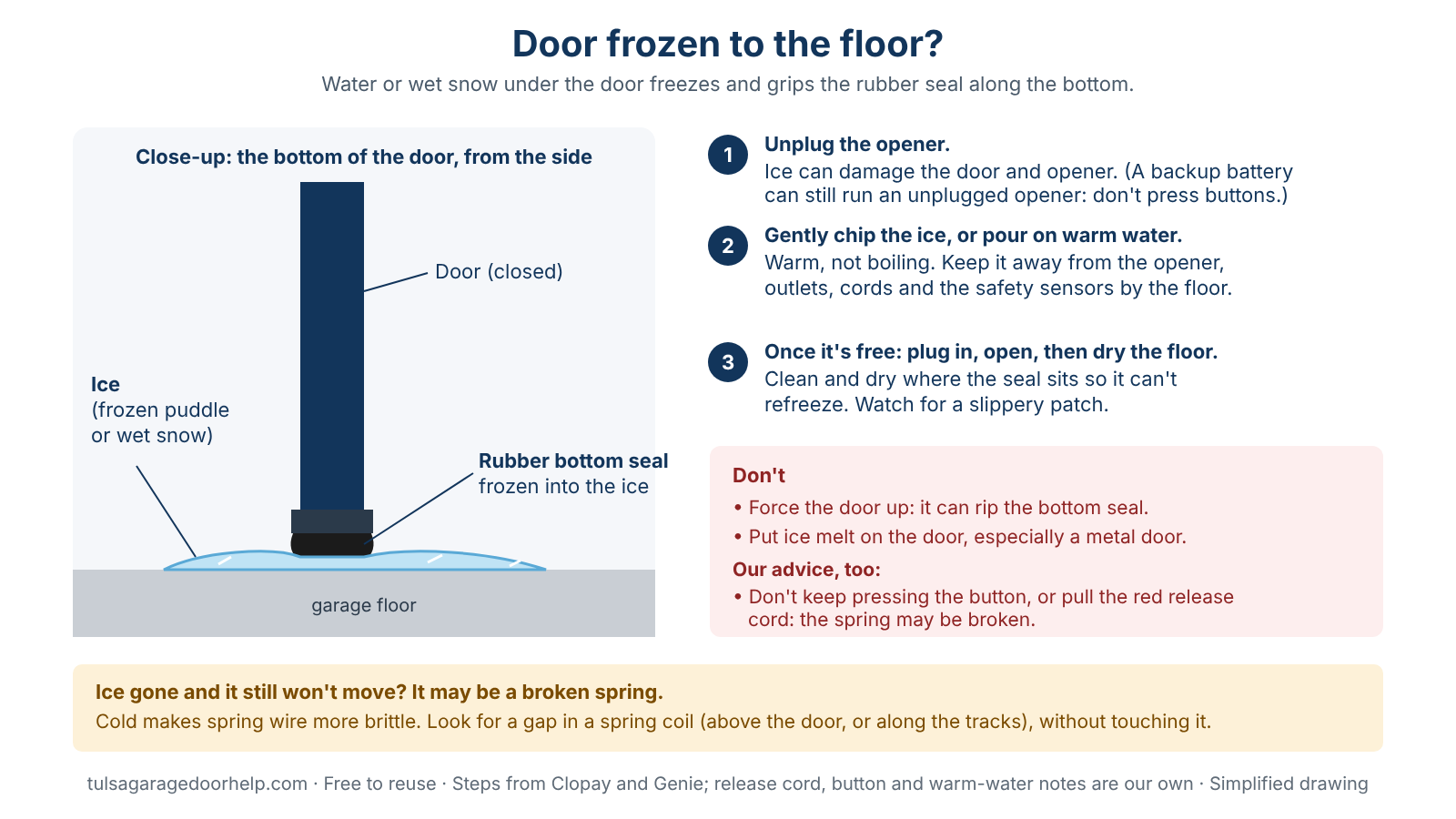
The door is frozen to the ground and will not lift
The likely cause, a quick check, what's safe to do, and what it usually costs.
Most likely: Bottom seal frozen to the floor by water or wet snow
Clopay says a bottom seal left in water or wet snow can freeze to the floor; listing it first is our judgment.
You can usually fix this yourself.
Also possible
- Ice or packed snow in the door's path or tracks. Check the floor line and the lower part of each track for ice, snow or frozen debris. DIY
- A spring broke in the cold (not ice at all). No ice along the bottom, but you heard a loud pop or can see a gap in the coil spring above the door. Needs a pro
- Seal torn because the door was forced. Once free, look for torn or missing rubber along the bottom edge. DIY first
Safe to do now
- Stop pressing the opener button as soon as the door will not move, and unplug the opener.
- Look first, from the floor: ice along the bottom? A gap in the coil of the spring above the door: stop and call a technician.
- Gently chip the ice away, or melt it with warm (not boiling) water along the bottom edge.
- Plug the opener back in when you are done. Once open, clear and dry the floor line so it does not refreeze.
- Keep snow and puddles cleared from in front of the door.
Don't
- Do not force the door or keep running the opener to break the ice.
- Do not use ice melt on the door, especially a metal door.
- Do not try to lift or run the door if a spring looks broken; call a technician.
Battery backup? An opener with a backup battery can still run the door when it is unplugged. Keep everyone clear of the door and keep the remotes out of reach. Your opener's manual says how to disconnect the battery.
Typical price
If it's the most likely cause: Often free: you can usually sort this yourself.
If it turns out to be one of the others:
- Torsion spring replacement: typically $350–$540 (installed). Source: This Old House, updated Mar 10, 2026.
- Most repairs: typically $98–$371 (across all repairs, including big ones: $98–$860). Source: This Old House, updated May 29, 2026.
National figures, not a quote. Every price range and its source.
Step by step: Garage door frozen shut? How to free it safely
Photos that help
If the safe steps don't sort it, these three photos help a shop quote it in writing:
- The gap or the worn seal with the door closed
- The bottom corner of the door from inside
- The whole door from outside
Take them from where you stand. Don't go under the door, and don't touch the springs, cables or tracks. How to send them.
Where this comes from (2 sources)
- Fixing Garage Door Problems from Cold Weather, Clopay
- Why Garage Doors Get Stuck - Causes & Fixes, Clopay
We read each source on 10 November 2026. The order of causes follows the makers' own troubleshooting pages where they give one; otherwise it is our judgment, and the page says so.
Not quite it? Describe your problem
Describe it in your own words, like "goes back up" or "remote stopped working".
Related problems
- There is a gap or daylight under the door, often on one side only
- The bottom seal sticks to the floor when it is not icy, and the door jerks free
- Wasps are nesting on the door or opener, or snakes are getting in around the door
- Water comes in under the garage door when it rains
- The rubber seal on the bottom is torn or flat and mice, bugs or leaves get in
- I feel a draft or see daylight around the sides or top of the door
Got a quote that feels high?
Text the amount and what it covers to (918) 205-5200. We compare it with published price data (the sources on our price page), and text you back within a business day. Free, no obligation, and we don't repair doors.
Diagram: Garage door frozen to the floor: how to free it safely