I want to lubricate the door but don't know which parts or what to use
The likely cause, a quick check, what's safe to do, and what it usually costs.
Most likely: Metal hinges and rollers are simply due
Chamberlain says to lubricate rollers, bearings and hinges yearly; Clopay says every three to six months. The spring is where they differ: Clopay suggests spraying it, Chamberlain's list leaves it out.
You can usually fix this yourself.
Also possible
- Lubricant was put in the tracks. Look inside the tracks for grease or oily dirt; wipe it out with a cloth. DIY
- The wrong product or the wrong part was sprayed. Check what the can says and whether your rollers are white nylon rather than bare steel. DIY
Safe to do now
- Look first: a gap in a spring, a loose or frayed cable or a crooked door means stop. Don't lubricate it; call a trained technician.
- Close the door and unplug the opener before you touch anything.
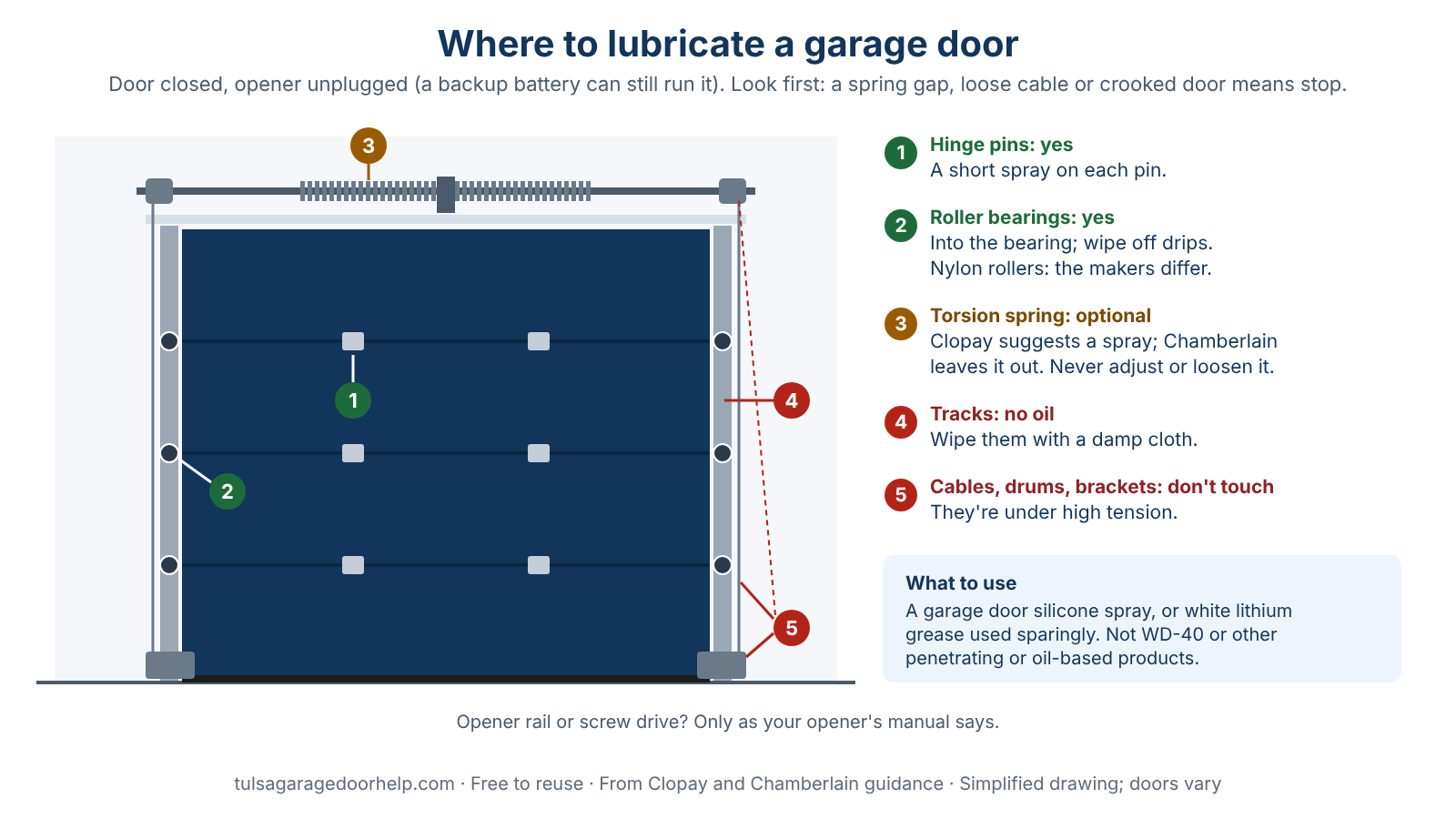
- Use a garage door spray; Clopay names silicone or white lithium, used sparingly.
- Spray the hinge pivots and the spinning part of metal rollers, then wipe off excess (Clopay).
- The spring is optional: Clopay suggests spraying the coils, Chamberlain leaves them out. Never adjust or loosen a spring.
- Clean the tracks with a cloth instead of lubricating them, as Clopay says.
- Check your opener manual. Genie and Garaga say never to lubricate a drive belt.
Don't
- Do not grease or oil the tracks; Chamberlain and Clopay both say to leave them dry.
- Do not lubricate a drive belt (Genie).
- Plastic or nylon rollers: makers differ. Amarr says not to lubricate plastic parts such as plastic rollers; otherwise spray only where the metal stem meets the wheel, or follow your door maker.
- Do not touch, adjust or pry on the springs, cables or bottom brackets. If you spray a spring, spray only.
Battery backup? An opener with a backup battery can still run the door when it is unplugged. Keep everyone clear of the door and keep the remotes out of reach. Your opener's manual says how to disconnect the battery.
Typical price
If it's the most likely cause: Often free: you can usually sort this yourself.
National figures, not a quote. Every price range and its source.
Good to know: Makers disagree. A Garaga page mentions lubricating tracks, and Genie and Garaga allow oils that Clopay says to avoid. We follow Clopay: a garage door silicone spray or white lithium grease, not WD-40 or oil-based products, unless your own door's manual names something else.
Step by step: How to lubricate a garage door (and which lubricant to use)
Photos that help
If the safe steps don't sort it, these three photos help a shop quote it in writing:
- A short video with sound while the door moves, taken from well back
- The spot the noise seems to come from
- The label on the opener (brand and model)
Take them from where you stand. Don't go under the door, and don't touch the springs, cables or tracks. How to send them.
Where this comes from (5 sources)
- Does my garage door opener require any monthly or annual maintenance?, Chamberlain Group (LiftMaster, Chamberlain and Craftsman support)
- How to Properly Lubricate Garage Door Components, Clopay
- Garage Door Care and Maintenance, Amarr
- Maintaining Your Garage Door, Genie
- Clopay care and maintenance brochure (RSDR-CRCAREMAINTBR-17), Clopay
We read each source on 10 November 2026. The order of causes follows the makers' own troubleshooting pages where they give one; otherwise it is our judgment, and the page says so.
Not quite it? Describe your problem
Describe it in your own words, like "goes back up" or "remote stopped working".
Related problems
- There is a grinding or metal-on-metal scraping noise when the door moves
- The door is suddenly much louder than it used to be
- There is a loud pop or bang from the door
- The opener is loud or vibrates at the motor unit when the door runs
- The door squeaks or squeals when it opens or closes
- The door rattles when it moves
Got a quote that feels high?
Text the amount and what it covers to (918) 205-5200. We compare it with published price data (the sources on our price page), and text you back within a business day. Free, no obligation, and we don't repair doors.
Diagram: Where to lubricate a garage door, and what to leave alone