The door squeaks or squeals when it opens or closes
The likely cause, a quick check, what's safe to do, and what it usually costs.
Most likely: Hinges and rollers need lubricant
Chamberlain's first suggestion for a noisy door is to lubricate hinges and rollers; Clopay's lubrication guide covers the same parts.
You can usually fix this yourself.
Also possible
- The springs are dry. Listen above the closed door, or along the tracks at each side, for a squeak that comes from the spring coils. DIY
- Rollers or hinges are worn out. If the squeak returns right after lubricating, look for wobbling rollers or hinges with side-to-side play. Needs a pro
Safe to do now
- Close the door and unplug the opener before you touch anything.
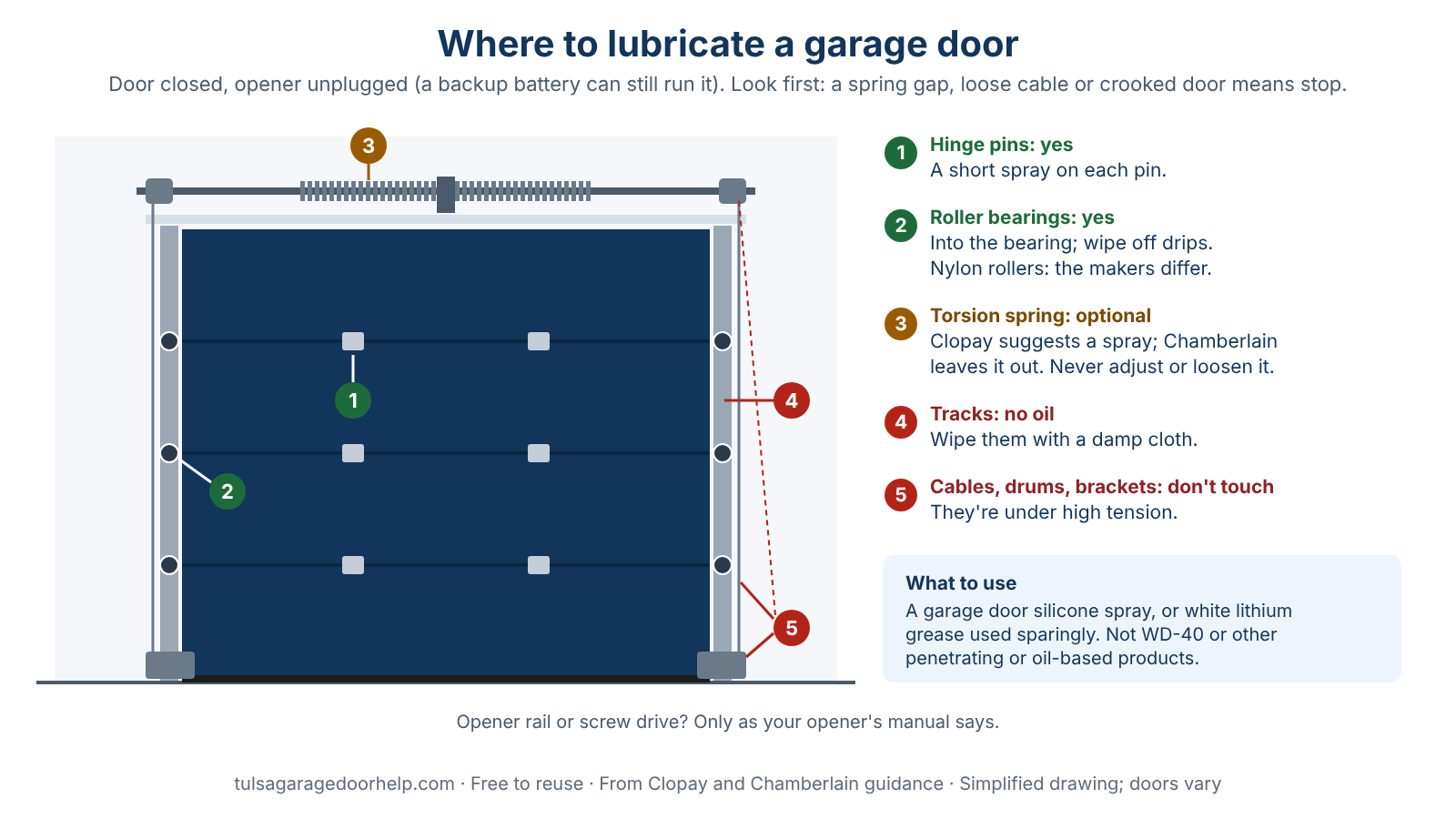
- Spray a garage door silicone spray or white lithium grease, sparingly, on hinge pivots and where metal roller wheels spin (Clopay).
- Optional: lightly spray the spring coils without touching them (DASMA, Clopay). Chamberlain leaves the spring out.
- Wipe off the excess. Plug the opener back in when you are done. Then run the door a few times, as Clopay says.
- Call a technician if the squeak continues after lubrication.
Don't
- Do not lubricate the tracks; that is Clopay's rule.
- Nylon rollers: Clopay says not to lubricate them; otherwise follow your door maker.
- Do not use WD-40 as the lubricant (Clopay).
- Do not touch or adjust the springs, only spray them.
Battery backup? An opener with a backup battery can still run the door when it is unplugged. Keep everyone clear of the door and keep the remotes out of reach. Your opener's manual says how to disconnect the battery.
Typical price
If it's the most likely cause: Often free: you can usually sort this yourself.
If it turns out to be one of the others:
- Most repairs: typically $98–$371 (across all repairs, including big ones: $98–$860). Source: This Old House, updated May 29, 2026.
National figures, not a quote. Every price range and its source.
Good to know: Makers differ on which lubricant. Clopay says silicone spray or white lithium, Genie says a garage door oil or grease, Garaga says a metal lubricant. We follow Clopay; check your door's manual.
Step by step: How to lubricate a garage door (and which lubricant to use)
Photos that help
If the safe steps don't sort it, these three photos help a shop quote it in writing:
- A short video with sound while the door moves, taken from well back
- The spot the noise seems to come from
- The label on the opener (brand and model)
Take them from where you stand. Don't go under the door, and don't touch the springs, cables or tracks. How to send them.
Where this comes from (5 sources)
- What to Do When Your Garage Door Makes Noises, Chamberlain Group (LiftMaster, Chamberlain and Craftsman support)
- Garage Door Safety Checklist, Clopay
- Safety Tips, DASMA (Door & Access Systems Manufacturers Association)
- Get Rid of a Noisy Garage Door Once and For All, Garaga (door manufacturer)
- How to Properly Lubricate Garage Door Components, Clopay
We read each source on 10 November 2026. The order of causes follows the makers' own troubleshooting pages where they give one; otherwise it is our judgment, and the page says so.
Not quite it? Describe your problem
Describe it in your own words, like "goes back up" or "remote stopped working".
Related problems
- There is a grinding or metal-on-metal scraping noise when the door moves
- The door is suddenly much louder than it used to be
- The door rattles when it moves
- There is a clicking or ticking sound from the door as it moves
- The door makes the house rumble or vibrate, especially the room above
- I want to lubricate the door but don't know which parts or what to use
Got a quote that feels high?
Text the amount and what it covers to (918) 205-5200. We compare it with published price data (the sources on our price page), and text you back within a business day. Free, no obligation, and we don't repair doors.
Diagram: Where to lubricate a garage door, and what to leave alone