After adding insulation, windows or other weight the door is heavy or drops
The likely cause, a quick check, what's safe to do, and what it usually costs.
Most likely: The springs are now too weak for the heavier door
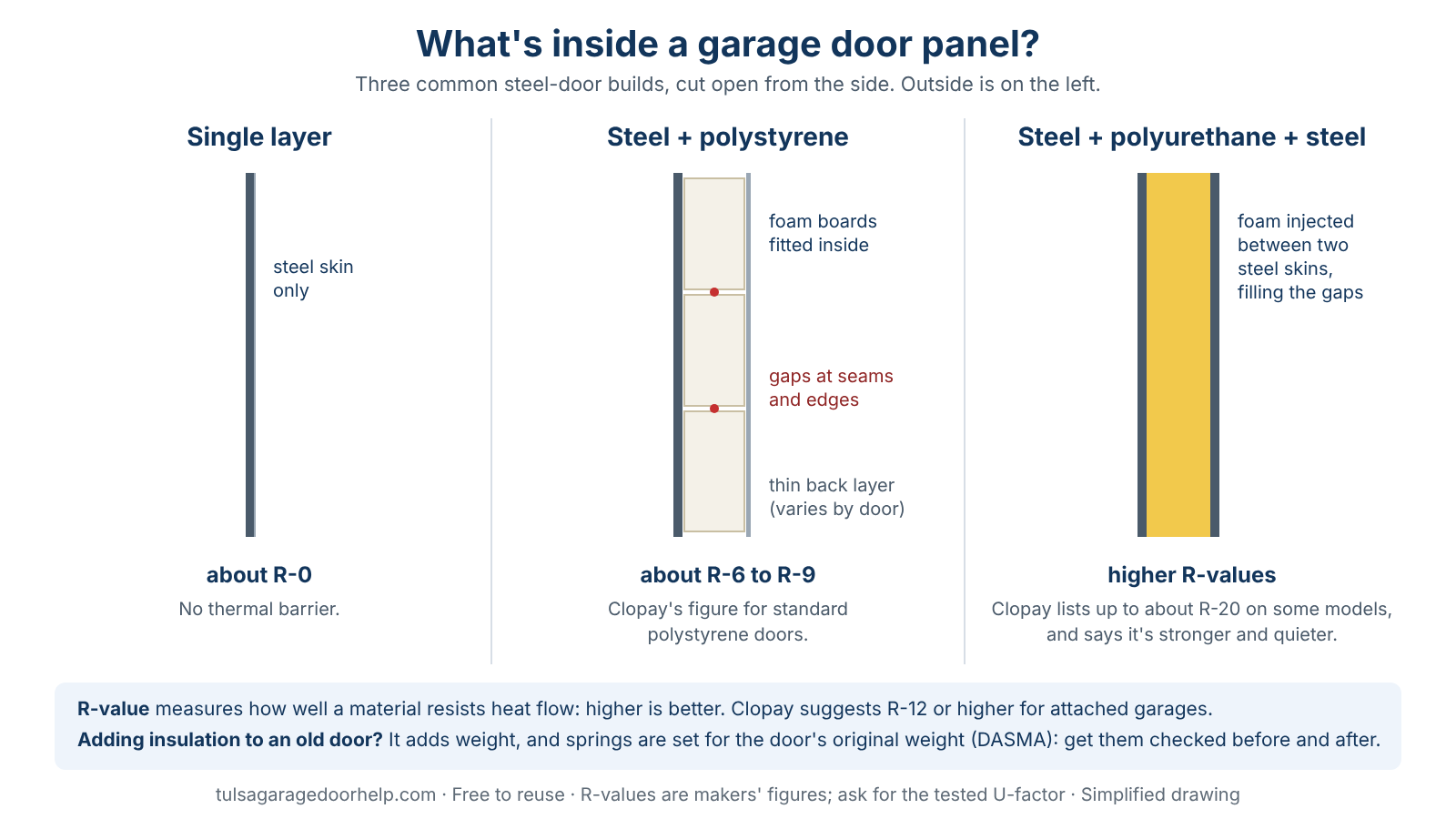
DASMA says springs are designed for the door's original weight; Knauf says its kit may need the springs tuned.
This one needs a garage door company.
Also possible
- The opener is overworked by the extra weight. Does the opener slow, strain, stop part-way or reverse since the change? Needs a pro
- Things are hung on the door or its track. Are hooks, racks, tools, decorations or boards fixed to the door or track? DIY
Safe to do now
- Keep people, pets and cars out from under the door, above all if it is open.
- Unplug the opener so nobody runs the door by accident.
- Tell the garage door company exactly what you added; a technician can weigh the door and match springs.
- Take down anything simply hanging from the door or track, if you can do so with the door closed.
- Ask the door's maker before adding anything else to it (DASMA).
Don't
- Don't adjust, wind or swap the springs yourself to make up for the weight.
- Don't raise the opener's force setting to lift the heavier door.
- Red release cord: only with the door fully closed. Never with a broken spring, loose cable or crooked door.
Battery backup? An opener with a backup battery can still run the door when it is unplugged. Keep everyone clear of the door and keep the remotes out of reach. Your opener's manual says how to disconnect the battery.
Typical price
If it's the most likely cause: Service call / diagnosis: typically $50–$75 (often waived if you go ahead with the repair). Source: This Old House, updated May 29, 2026.
National figures, not a quote. Every price range and its source.
Step by step: Torsion vs extension springs: how to tell them apart
Photos that help
These three photos help a shop quote it in writing:
- The spring: the bar above the door, or the long springs beside the upper tracks, end to end
- Both bottom corners of the door, where the cables attach
- The whole door from inside the garage
Take them from where you stand. Don't go under the door, and don't touch the springs, cables or tracks. How to send them.
Where this comes from (3 sources)
- DASMA Technical Data Sheet #176, DASMA (Door & Access Systems Manufacturers Association)
- Knauf Garage Door Install Kit installation instructions, Knauf Insulation
- DASMA Technical Data Sheet #190, DASMA (Door & Access Systems Manufacturers Association)
We read each source on 10 November 2026. The order of causes follows the makers' own troubleshooting pages where they give one; otherwise it is our judgment, and the page says so.
Not quite it? Describe your problem
Describe it in your own words, like "goes back up" or "remote stopped working".
Related problems
- Left half open by hand, the door drifts down instead of staying put
- The long side springs have no cable running through the middle
- The door acts worse after a repair visit or new springs
- The door slams shut or drops fast when closing
- There was a loud bang in the garage and now the door will not lift
- I can see a gap in the big spring above the garage door
Got a quote that feels high?
Text the amount and what it covers to (918) 205-5200. We compare it with published price data (the sources on our price page), and text you back within a business day. Free, no obligation, and we don't repair doors.
Diagram: Insulated vs non-insulated garage doors: what's inside the panel