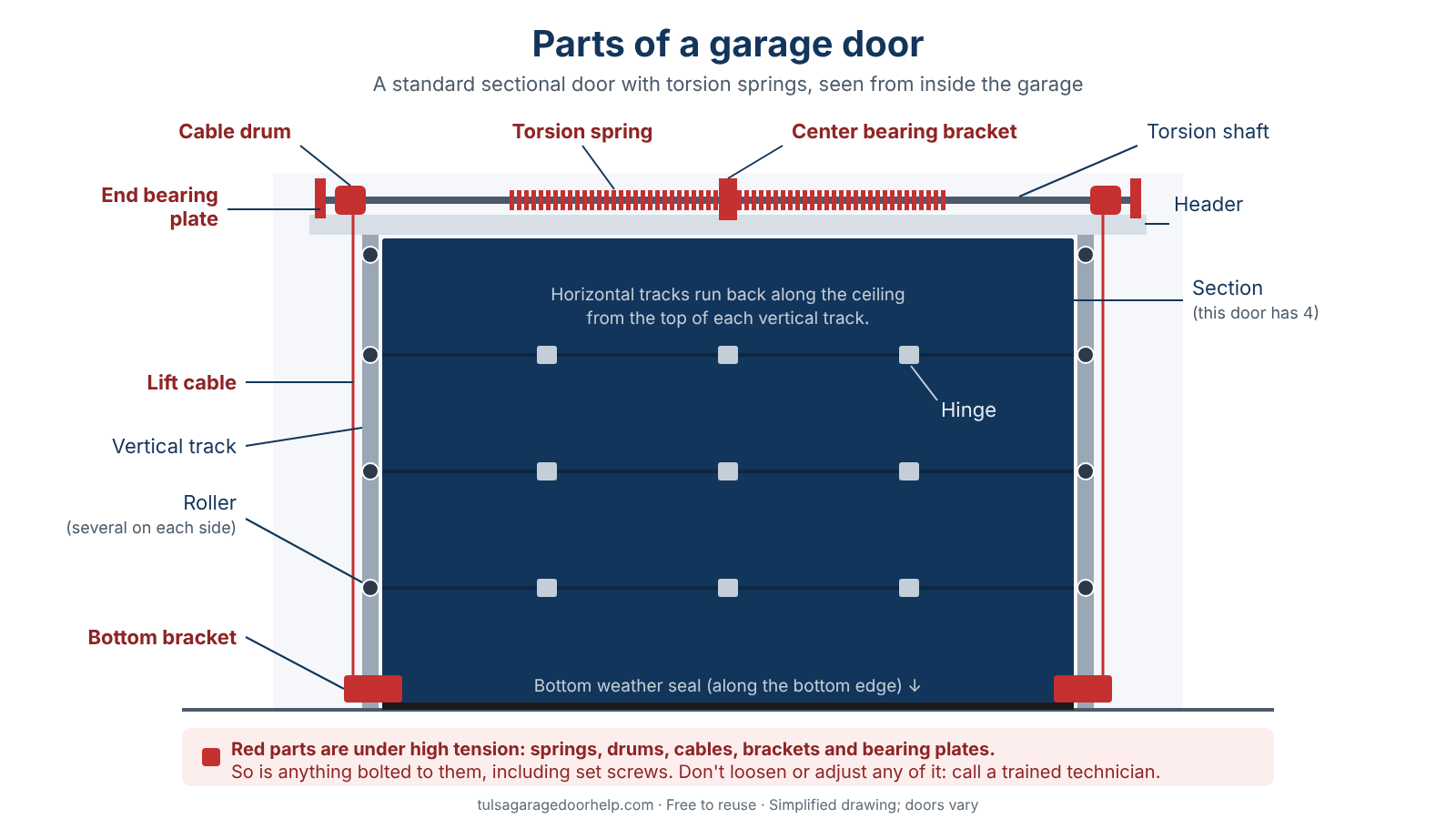
The bracket at the bottom corner of the door is loose, bent or rusted
The likely cause, a quick check, what's safe to do, and what it usually costs.
Most likely: Rust has weakened the bracket or the bottom of the door
Our judgment: the bottom corner sits in water and road salt, and Amarr notes salt corrodes steel doors.
This one needs a garage door company.
Also possible
- The bracket's fasteners have loosened or pulled out. Look for a gap between bracket and door, or missing or backed-out fasteners. Do not test it by hand. Needs a pro
- Impact damage from a car or object. Look for a dent or bent metal at bumper height near the corner. Needs a pro
Safe to do now
- Stop using the door and keep people away from that corner.
- Unplug the opener so nobody runs the door by accident.
- Take a photo from a safe distance for the repair company.
- Call a trained door technician to repair or replace the bracket.
Don't
- Do not loosen, tighten or remove the bottom bracket or its fasteners.
- Do not touch the lift cable attached to it.
- Do not pull the red release, run the opener or move the door by hand.
Battery backup? An opener with a backup battery can still run the door when it is unplugged. Keep everyone clear of the door and keep the remotes out of reach. Your opener's manual says how to disconnect the battery.
Typical price
If it's the most likely cause: Most repairs: typically $98–$371 (across all repairs, including big ones: $98–$860). Source: This Old House, updated May 29, 2026.
National figures, not a quote. Every price range and its source.
Step by step: Garage door cable snapped: what it means and what to do
Photos that help
These three photos help a shop quote it in writing:
- The track and rollers where the trouble is
- The same spot on the other side, to compare
- The whole door from inside the garage
Take them from where you stand. Don't go under the door, and don't touch the springs, cables or tracks. How to send them.
Where this comes from (5 sources)
- Automatic Garage Door Opener Safety & Maintenance Guide, DASMA (Door & Access Systems Manufacturers Association)
- Garage Door Safety Checklist, Clopay
- Garage Door Care and Maintenance, Amarr
- Why did my garage door come off its tracks?, Garaga (door manufacturer)
- Safety Tips, DASMA (Door & Access Systems Manufacturers Association)
We read each source on 10 November 2026. The order of causes follows the makers' own troubleshooting pages where they give one; otherwise it is our judgment, and the page says so.
Not quite it? Describe your problem
Describe it in your own words, like "goes back up" or "remote stopped working".
Related problems
- The door binds or sticks at the same spot every time
- The bracket holding the top roller is loose, bent or has come off
- A roller is cracked, broken or wobbling in the track
- There is a gap between the rollers and the track, or the track is loose
- The door rubs or scrapes against the frame or the track as it moves
- The door shakes, wobbles or jerks as it goes up or down
Got a quote that feels high?
Text the amount and what it covers to (918) 205-5200. We compare it with published price data (the sources on our price page), and text you back within a business day. Free, no obligation, and we don't repair doors.
Diagram: Parts of a sectional garage door