After a storm the door is pushed in, bowed or will not move
The likely cause, a quick check, what's safe to do, and what it usually costs.
Most likely: Sections or track bent by wind pressure
DASMA says garage doors sit in the largest opening of a house and can be pushed in or pulled out by wind.
This one needs a garage door company.
Also possible
- Door or opening not built for local wind loads. Older doors are most at risk. Ask a dealer or the door maker whether your model is rated for your area's wind speeds. Needs a pro
- Frame, jambs or track attachment pulled loose. Look for cracked or shifted wood around the opening and track brackets pulled away from the wall. Needs a pro
Safe to do now
- If the walls, roof or frame around the door look damaged, stay out: photograph from outside at a safe distance and call a garage door technician (and a building professional for major structural damage). If the garage looks sound and you can get in safely through another door, look the door over from inside with it closed, and stop at the first problem you see.
- Keep people away and do not operate the door until a trained technician has checked it.
- Unplug the opener so nobody runs the door by accident.
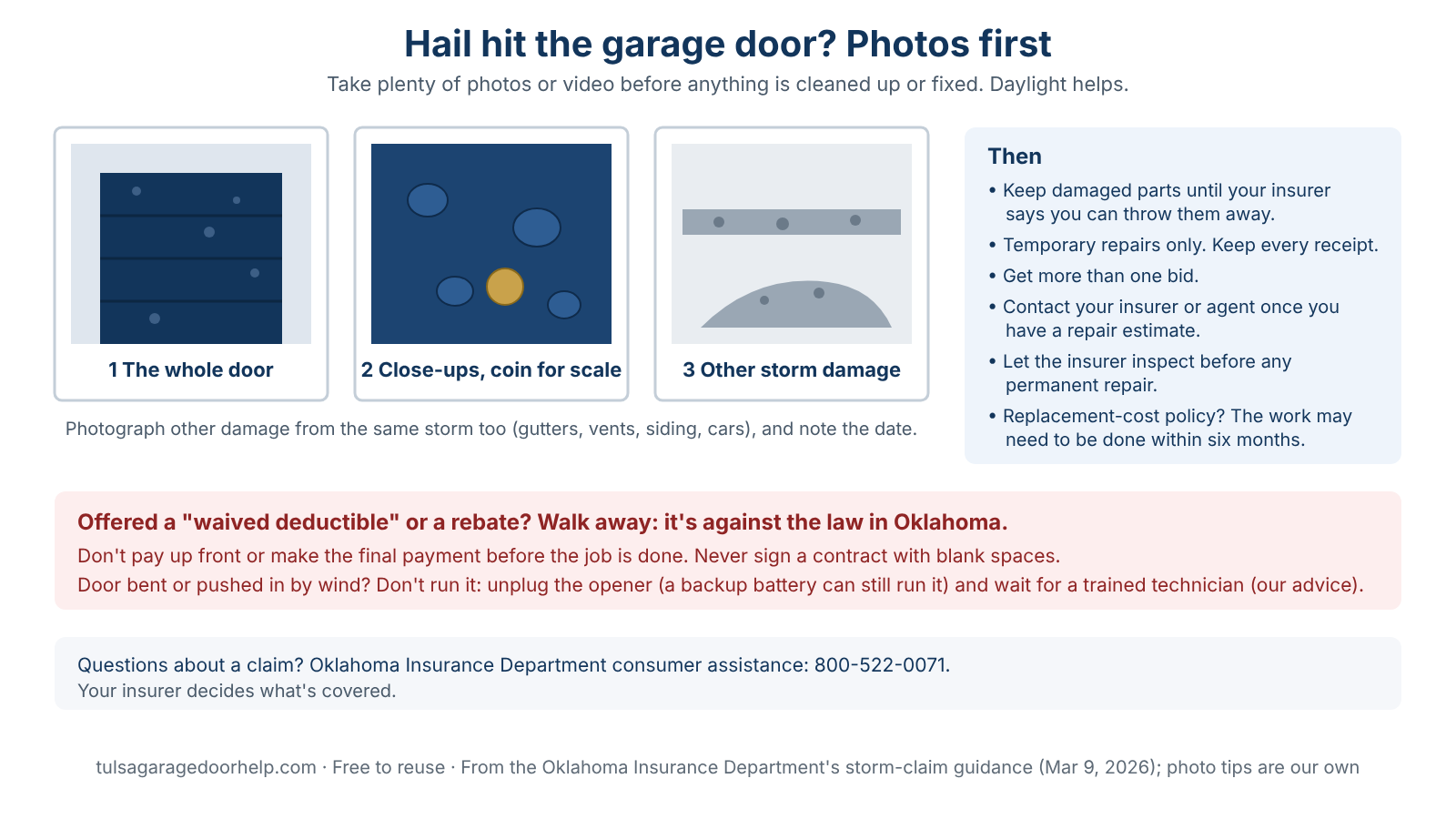
- Photograph the damage for insurance.
- Ask the technician about a wind-rated door or maker-approved reinforcement.
Don't
- Do not operate a door with bent sections, bent track or rollers out of the track.
- Do not add your own bracing or park a car against the door as reinforcement.
- Do not treat the garage as a tornado shelter.
Battery backup? An opener with a backup battery can still run the door when it is unplugged. Keep everyone clear of the door and keep the remotes out of reach. Your opener's manual says how to disconnect the battery.
Typical price
If it's the most likely cause: Most repairs: typically $98–$371 (across all repairs, including big ones: $98–$860). Source: This Old House, updated May 29, 2026.
If it turns out to be one of the others:
- New door, installed: typically $1,093–$1,674 one-car, $2,186–$3,348 two-car (standard installation). Source: This Old House, updated Mar 13, 2026.
National figures, not a quote. Every price range and its source.
Step by step: Hail damage and your garage door: an Oklahoma guide
Photos that help
These three photos help a shop quote it in writing:
- The damage from outside
- The same spot from inside
- The whole door from outside, plus the maker's sticker on the inside if there is one
Take them from where you stand. Don't go under the door, and don't touch the springs, cables or tracks. How to send them.
Where this comes from (4 sources)
- TDS 152: Garage Doors and High Wind Events, DASMA (Door & Access Systems Manufacturers Association)
- TDS 174: Building Occupant - Checking a Residential Sectional Garage Door for Damage, DASMA (Door & Access Systems Manufacturers Association)
- TDS 191: Sectional Garage Doors and Tornadoes, DASMA (Door & Access Systems Manufacturers Association)
- Protecting and Securing Garage Doors, LSU AgCenter (university extension)
We read each source on 10 November 2026. The order of causes follows the makers' own troubleshooting pages where they give one; otherwise it is our judgment, and the page says so.
Not quite it? Describe your problem
Describe it in your own words, like "goes back up" or "remote stopped working".
Related problems
- Flood water got up onto the door, tracks or opener
- Gaps are opening up between the door's sections
- My one-piece tilt-up door swings unevenly, binds or kicks out at the bottom
- There was a fire or heavy smoke in the garage and the door or opener got hot
- A panel on the door is cracked or splitting
- The door bows or curves, especially when the sun is on it
Got a quote that feels high?
Text the amount and what it covers to (918) 205-5200. We compare it with published price data (the sources on our price page), and text you back within a business day. Free, no obligation, and we don't repair doors.
Diagram: Hail hit the garage door? What to photograph, and what to do next